

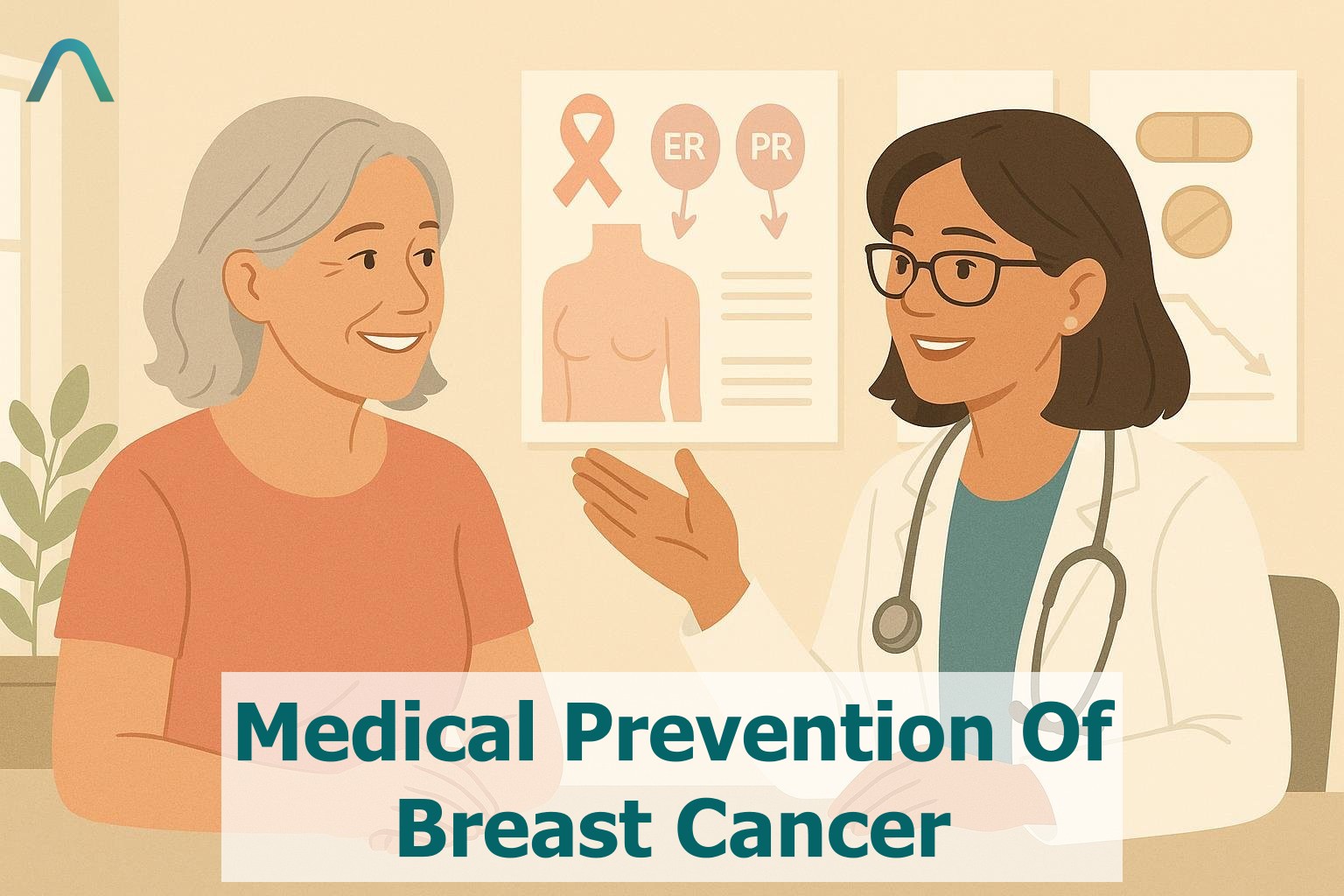
Medical Prevention of Breast Cancer
Each year, more than 300,000 females in the United States are diagnosed with breast cancer. Some factors raise risk, including getting older, a strong family history, and certain breast findings like lobular carcinoma in situ (LCIS) or atypical hyperplasia.
For some females at higher risk, medicines can lower the chance of developing breast cancer. These medicines work only against hormone receptor–positive cancers. Decisions are personal. Talk with your oncology team about your risk and whether medication fits your goals and values.
Who might consider medication?
- You are age 35 or older and have LCIS or atypical hyperplasia.
- Your calculated 5-year breast cancer risk is 1.66% or higher (for example, by the Gail model).
- You have a strong family history or other factors that make your risk higher.
Risk calculators are only tools. They may not include some genetic risks (such as BRCA1 or BRCA2). Review your results with your care team or a genetics professional to get a clear picture.
How do preventive medicines work?
These medicines act on estrogen, a natural hormone. Many breast cancers grow in response to estrogen and progesterone. These are called hormone receptor–positive cancers. You may hear the terms ER-positive (estrogen receptor–positive) and PR-positive (progesterone receptor–positive).
- Selective estrogen receptor modulators (SERMs): tamoxifen and raloxifene block estrogen’s effect in breast tissue.
- Aromatase inhibitors (AIs): anastrozole and exemestane lower estrogen levels in postmenopausal females by blocking the aromatase enzyme.
Whichever medicine is chosen, it is commonly taken for about five years.
How effective are they?
Tamoxifen (SERM): Across multiple studies, tamoxifen lowers the risk of developing hormone receptor–positive breast cancer by at least one-third in higher-risk females. It can be used before and after menopause. When used to prevent cancer, tamoxifen does not appear to improve overall survival. Serious side effects are uncommon but possible.
Raloxifene (SERM): In postmenopausal females at higher risk, raloxifene reduces the chance of invasive ER-positive breast cancer. In a head-to-head trial, raloxifene was slightly less effective than tamoxifen but had fewer serious risks like uterine cancer. It has not been studied for prevention in premenopausal females.
Aromatase inhibitors (AIs): Anastrozole and exemestane lowered breast cancer risk by at least 50% compared with placebo in studies of postmenopausal females. In the United States, AIs are not FDA approved for primary prevention, even though professional groups discuss their use. Long-term effects on bone and heart health are still being studied, and joint or muscle symptoms are common.
Common side effects and safety
- SERMs (tamoxifen, raloxifene): Hot flashes, night sweats, vaginal discharge or dryness, mood changes. Rare but serious risks include blood clots (in the legs or lungs), stroke, and with tamoxifen, a higher risk of uterine cancer and cataracts.
- AIs (anastrozole, exemestane): Joint and muscle aches, hot flashes, vaginal dryness, fatigue. They can thin the bones over time and may raise fracture risk; cholesterol changes can occur.
Not everyone experiences these effects. Your team can discuss ways to manage symptoms and monitor your health while on medication.
Precautions and special situations
- Blood clots: SERMs may not be appropriate if you have had a deep vein thrombosis (DVT) or pulmonary embolism, or if you take anticoagulants.
- Uterus concerns: Tamoxifen can raise the chance of uterine cancer; report abnormal bleeding promptly.
- Smoking: Smoking increases clot and stroke risk. Discuss risks and support for quitting.
- Pregnancy and breastfeeding: Tamoxifen can harm a developing baby. It is not used during pregnancy or breastfeeding. If you are premenopausal on tamoxifen, ask about reliable nonhormonal birth control. Some hormonal birth control can interact.
- Menopause status: AIs are generally used only after menopause for prevention. In premenopausal females, AIs can trigger the body to make more estrogen.
What to expect if you start medication
- Duration: Many prevention plans last five years.
- Check-ins: You will have regular visits to review side effects and benefits. Bone density testing may be recommended with AIs.
- Screening continues: You will still need routine breast screening (such as mammograms). These medicines do not prevent all breast cancers.
- Everyday health: Staying active, limiting alcohol, not smoking, and keeping a healthy weight support overall health. These steps do not replace screening or medical options.
Choosing among options: SERM or AI?
For postmenopausal females, both SERMs and AIs are options discussed in guidelines, though AIs are not FDA approved for prevention in the U.S. There are no trials directly comparing SERMs to AIs for prevention. Tamoxifen appears more effective than raloxifene, but raloxifene shows fewer serious side effects. For premenopausal females who choose medication, tamoxifen is the option studied for prevention.
Your choice depends on your personal risk, menopause status, other health conditions, and which side effects matter most to you. Ask your oncology team to walk through the expected benefits and risks in your situation.
Questions to ask your care team
- What is my 5-year and lifetime risk of breast cancer, and how was it calculated?
- Would a SERM or an AI fit me better, and why?
- What benefits can I expect, and how many people like me need treatment to prevent one cancer?
- What side effects should I watch for, and how can we manage them?
- How will this affect my bones, heart health, eyes, or uterus?
- How will this interact with my current medicines or birth control?
- How often will I have check-ups, labs, or bone density tests?
- What are the costs and insurance coverage?
Key takeaways
- Medicines can lower the risk of ER-positive or PR-positive breast cancers in some higher-risk females.
- Tamoxifen and raloxifene (SERMs) are proven options; AIs also lower risk in postmenopausal females but are not FDA approved for prevention in the U.S.
- Most people take these medicines for about five years.
- Benefits and risks differ. Your menopause status and health history guide the choice.
- Keep up with regular screening and talk with your team about any symptoms.
Helpful tools and references
Last reviewed: 2026-01-19


