

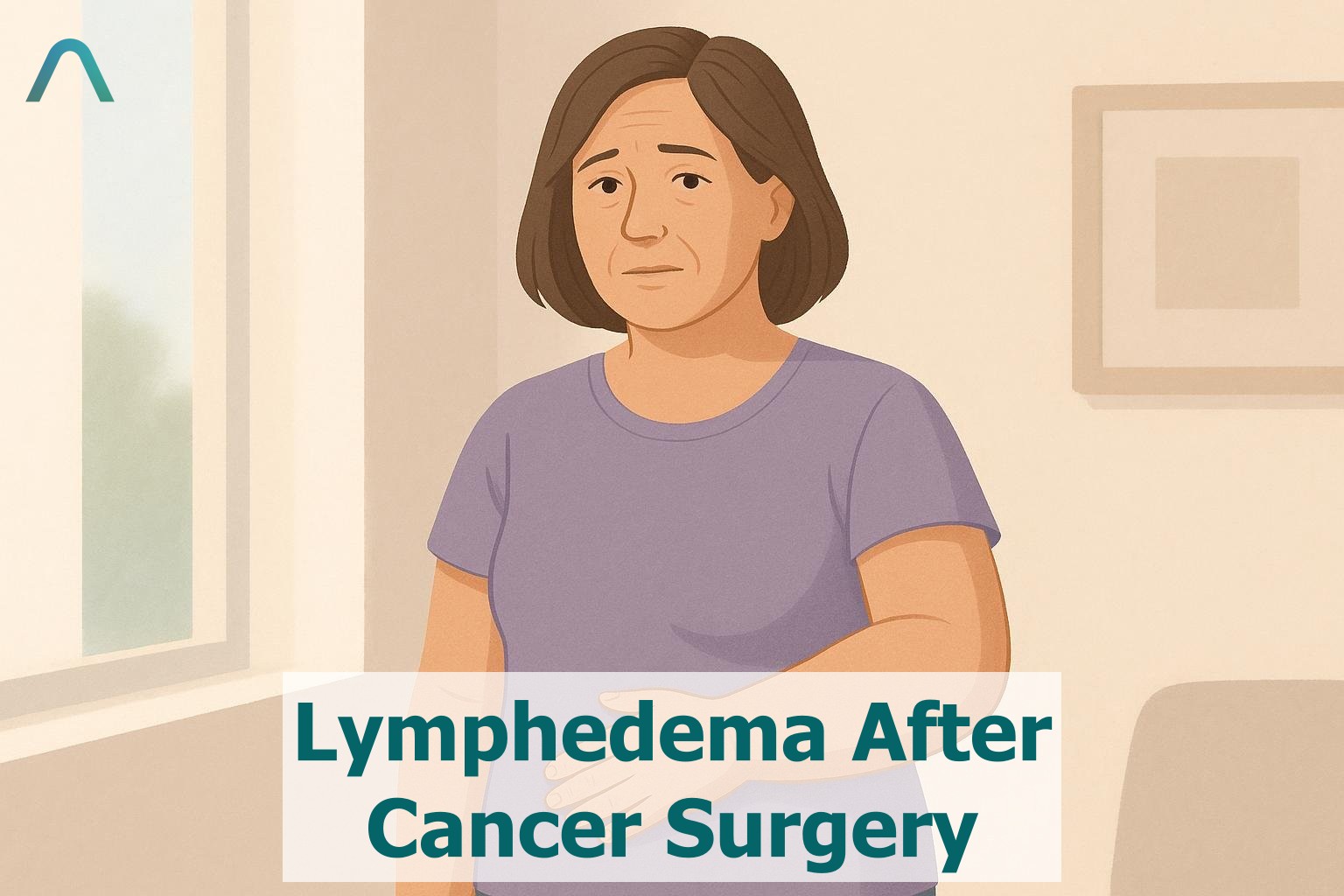
Lymphedema After Cancer Surgery
Lymphedema is swelling caused by a buildup of lymph fluid and extra fatty tissue. It can happen after cancer treatment, most often in an arm, leg, or the face. While it is usually not life-threatening, it can add stress to recovery and daily life. Learning the signs and common care steps can help you feel more in control.
What is lymph?
Lymph is a clear fluid that carries protein and white blood cells. Tiny vessels move lymph out of your tissues, through lymph nodes (also called glands), and back into your bloodstream. When this flow is slowed or blocked, fluid can build up and cause swelling.
Who gets lymphedema?
Anyone treated for cancer can develop lymphedema, but some factors raise risk. It can start soon after treatment or years later, and the risk lasts a lifetime.
- Removal of lymph nodes (higher number removed means higher risk; even a sentinel node biopsy has some risk).
- Radiation to areas that contain lymph nodes or lymph vessels.
- Extensive surgery that injures the lymph channels in the skin.
- Some chemotherapy medicines.
- Obesity or weight gain after treatment.
- After-surgery problems like infections or fluid collections (seromas).
- Injury or trauma to the limb later on.
Lymphedema symptoms
Tell your oncology team if you notice early changes. Sometimes symptoms show up before obvious swelling.
- Swelling in the arm, leg, hand, foot, breast, chest wall, or face.
- A heavy or aching feeling; tightness, throbbing, or discomfort.
- Tingling or numbness; fatigue with use of the limb.
- Skin feels tight; clothing, jewelry, or shoes fit differently.
- Stiffness or less range of motion.
- Skin changes or repeat skin infections.
How it may affect daily life
- Changes in the look or shape of a limb can be distressing.
- Swelling can make it harder to use your arm or leg, especially if it is your dominant side.
- Skin can heal more slowly, and some people have chronic discomfort.
Monitoring and lowering risk
No single step prevents lymphedema for sure, but healthy habits can lower risk or reduce severity. Your team may suggest baseline measurements of your limb and periodic checks.
- Stay active. Gentle aerobic activity and light resistance training are generally helpful. Start low and go slow, and ask your team for a safe plan.
- Maintain a healthy weight. Weight control can lessen strain on the lymph system.
- Protect your skin. Keep skin clean and moisturized; use sunscreen; avoid picking at cuticles; consider an electric razor; wear gloves for gardening or chores; wear socks and sturdy shoes outdoors.
- Avoid tight bands or clothing that press on the affected area. Be cautious with straps or harnesses that could compress the limb.
- Compression garments. Properly fitted sleeves or stockings are often used to control swelling and, in some cases, for a short time after surgery. Ask if and when a garment is right for you.
- Plan medical procedures. Many people try to avoid blood draws, IVs, injections, and repeated blood pressure checks on an affected arm when possible. Discuss options with your team.
- Travel tips. On long trips, take movement breaks and stretch. If your team advises a compression garment, wear it as directed.
How lymphedema is evaluated
If you develop swelling, your team will consider other causes too, such as a blood clot, infection, or cancer growth. They may use a physical exam, limb measurements, and sometimes imaging. Ruling out other conditions helps guide the best next steps.
Common parts of lymphedema care
There is no cure once lymphedema is established, but many people get good control with early, consistent care. A certified lymphedema therapist can be very helpful.
- Complete decongestive therapy (CDT): a program that combines skin care, specialized massage (manual lymph drainage), compression (bandaging or garments), and exercise.
- Compression devices: some people use pneumatic pumps at home or in clinic settings. Your team will advise if this fits your situation.
- Education and self-care: learning bandaging, garment use, and skin care builds confidence and independence.
- Emotional support: body image and daily routines can change. Support groups, counseling, or peer mentors can help.
Surgical options
Surgery is not for everyone, but it can help in selected cases and is done by surgeons with lymphatic expertise.
- Lymphovenous bypass (LVB): connects small lymph vessels to nearby veins to bypass damaged areas. Often considered for earlier-stage lymphedema; sometimes done at the time of lymph node removal (immediate lymphatic reconstruction).
- Vascularized lymph node transfer (VLNT): moves healthy lymph nodes from one area to the affected limb to improve drainage.
- Liposuction: removes excess fatty tissue that can build up in later stages.
Each approach has benefits and risks. Ask about expected results, recovery time, and ongoing compression needs.
Helpful resources and references
- National Cancer Institute (PDQ): Lymphedema
- MedlinePlus: Lymphedema
- National Lymphedema Network
- International Lymphoedema Framework
Last reviewed: 2026-01-19


