

Low-bacteria diet: How germs get in food and how to lower your risk
When you are going through cancer treatment, your immune system might be weaker than usual. A low-bacteria (also called low-microbe) diet helps lower your chance of foodborne illness. You can still enjoy many foods. The key is choosing safer options and handling food carefully.
What is a low-bacteria diet?
This eating plan focuses on foods with fewer germs and on safe food handling. Cooking and pasteurization reduce bacteria and other germs. Most of the time, a healthy immune system can handle small amounts of germs. When your immune system is weak, even a few germs can cause illness.
How do germs get in food?
- On the farm: Germs from soil, animal waste, or irrigation water can get on produce or grains.
- From animals: Raw meat, poultry, seafood, and eggs can carry bacteria, viruses, or parasites.
- During processing: Equipment, surfaces, or people’s hands can spread germs if not cleaned well.
- Cross-contamination: Juices from raw meat or unwashed produce can touch ready-to-eat foods, knives, or cutting boards.
- Unpasteurized items: Raw milk, soft cheeses made with unpasteurized milk, and unpasteurized juice can contain harmful germs.
- Unsafe temperatures: Food kept in the “danger zone” (40°F to 140°F) lets germs multiply fast.
- Time: The longer food sits out, the more germs can grow—especially at room temperature.
- Unclean water or ice: Germs can enter through water used for washing, cooking, or making ice.
- Damaged or bulging cans and leaking packages: These can signal contamination.
- Sprouts: Tiny seeds can carry germs inside, and sprouts grow in warm, moist conditions that favor bacteria.
Why might your care team recommend it?
Your care team might suggest a low-bacteria diet when your immune system is weaker. This can happen with:
- Cancer treatments, including chemotherapy and radiation
- Medicines after transplant or other immunosuppressive drugs
- Low neutrophil counts (neutropenia) or certain blood cancers
- Other medical conditions that reduce your infection-fighting ability
Ask your oncology team or dietitian how strict you should be and how long to follow this plan.
What can you eat and drink on a low-bacteria diet?
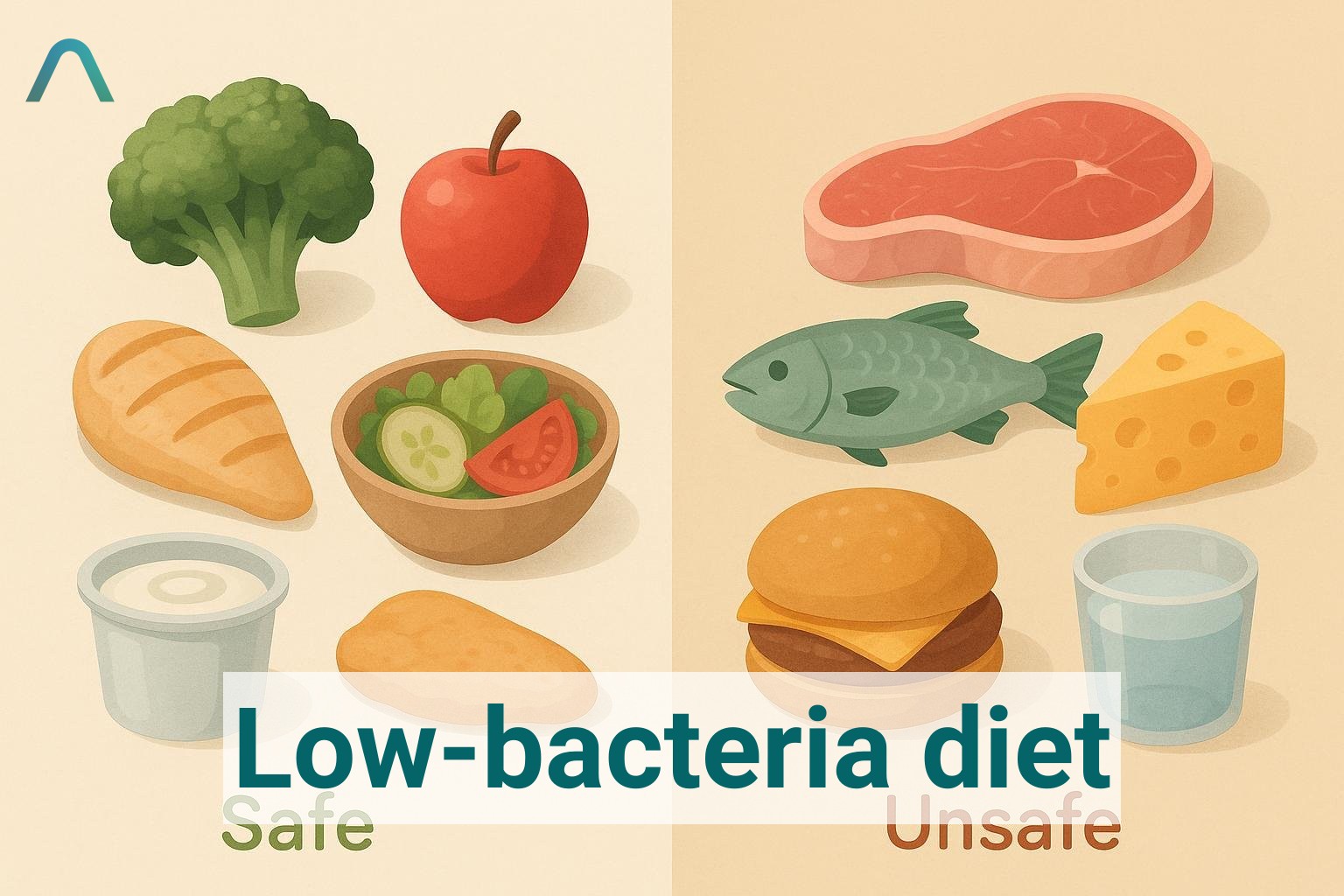
Choose foods that are cooked, pasteurized, or commercially packaged. These steps reduce germs.
- Grains: Breads, bagels, rolls, muffins; chips, pretzels, popcorn; pasta, rice, other cooked grains; cookies, cakes, pies, pastries; cooked and ready-to-eat boxed cereals.
- Fruits: Canned or stewed fruit; dried fruit; fresh fruit that is thoroughly washed and peeled.
- Vegetables: Cooked vegetables (fresh, frozen, or canned). Fresh raw vegetables only if thoroughly washed and peeled when possible.
- Dairy: Pasteurized milk, yogurt, and ice cream; cheeses made with pasteurized milk that are commercially packaged (for example, mild or medium cheddar, mozzarella, parmesan, cream cheese).
- Meats, poultry, seafood, proteins: Fully cooked meats (not rare or medium rare); eggs with firm whites and fully cooked yolks; commercially packed salami, bologna, and other luncheon meats; canned meat and fish; canned meat spreads; commercially packaged nut butters; cooked tofu; roasted nuts; egg substitutes. Ask your team if they prefer deli meats to be heated until steaming.
- Other items: Tap water and commercially bottled water; coffee or tea made with boiled water; commercially prepared nutritional supplements; condiments; pasteurized or commercially prepared honey.
What foods and drinks should I avoid?
Raw or undercooked foods are more likely to carry germs. Avoid:
- Grains: Raw dough or batter; cream-filled pastries that are not shelf-stable.
- Fruits: Raw, unwashed, or unpeeled fruits; unpasteurized fruit juice.
- Vegetables: Raw, unwashed, or unpeeled vegetables or herbs; any sprouts (alfalfa, bean, etc.); salad bar items; unpasteurized vegetable juices.
- Dairy: Raw or unpasteurized dairy; cheese from the deli; mold-ripened cheeses (blue cheese, gorgonzola); soft cheeses like feta, brie, Roquefort, goat cheese; soft-serve ice cream or frozen yogurt; kefir; Mexican-style cheeses like queso fresco or queso blanco.
- Meats, poultry, seafood, proteins: Undercooked or rare meats; undercooked eggs; unroasted raw nuts; freshly sliced cold cuts from the deli; smoked or pickled fish, lox; sushi; raw oysters or clams; tempeh.
- Other items: Well water unless tested and found safe; coffee or tea not made with boiled water; fresh (refrigerated) salad dressings with raw ingredients; raw honey; miso; brewer’s yeast; aioli; kombucha.
How can I safely prepare food?
- Wash your hands with soap and water for 20 seconds before cooking and after handling raw meat, poultry, fish, or eggs.
- Thaw foods in the refrigerator or microwave, not on the counter. Marinate in the refrigerator.
- Rinse fresh fruits and vegetables under running water. Peel when possible. Scrub firm produce with a clean brush.
- Use separate cutting boards and knives for raw meats and for ready-to-eat foods. If possible, avoid wooden cutting boards.
- Do not let juice from uncooked meat, poultry, or fish touch other foods. Use clean plates and utensils for cooked foods.
- Cook foods to safe internal temperatures. Use a food thermometer. As a guide: poultry 165°F (74°C); ground meat 160°F (71°C); fish 145°F (63°C); leftovers 165°F (74°C).
- Keep hot foods at 140°F (60°C) or hotter until serving.
- Do not taste raw batter or dough (it can contain raw eggs or flour with germs).
- Clean kitchen surfaces, tools, and sinks with hot, soapy water. Replace or sanitize sponges and dishcloths often.
How can I safely store food?
- Set your refrigerator at 33–40°F (0.6–4°C) and your freezer at 0°F (-17.8°C) or lower.
- Follow the 2-hour rule: Refrigerate perishable foods within 2 hours (within 1 hour if it is above 90°F/32°C outside).
- Store cold foods in the refrigerator and take them out right before eating. Do not leave mayonnaise or dairy out for more than 30–60 minutes.
- Put away cold foods as soon as you get home. Use a cooler for groceries in hot weather.
- Check dates. Throw away food past its expiration date.
- Use leftovers and opened packages within 2–3 days, unless the label says otherwise.
- Store eggs and dairy in the back of the refrigerator (colder area), not in the door.
- Reheat leftovers to 165°F (74°C). Bring sauces and soups to a rolling boil.
What else should I know?
- Avoid places where food may sit out for a long time, like salad bars, steam tables, bulk food bins, store samples, street vendors, and multi-use condiment containers.
- Be cautious with precut produce, self-serve ice or drink dispensers, drinking fountains, and soft-serve machines if you are unsure about cleaning practices.
- Read labels for the word “pasteurized.” If a juice, dairy product, or honey is not pasteurized, skip it.
- When in doubt, throw it out. If food looks, smells, or tastes off—or the package is damaged—do not eat it.
Talk with your oncology team
Your diet can be flexible and still be safe. Ask your team for guidance that fits your treatment plan, cultural foods, and preferences. A registered dietitian can help you build meals you enjoy while staying within a low-bacteria approach.
References and helpful resources
Last reviewed: 2025-12-04


