

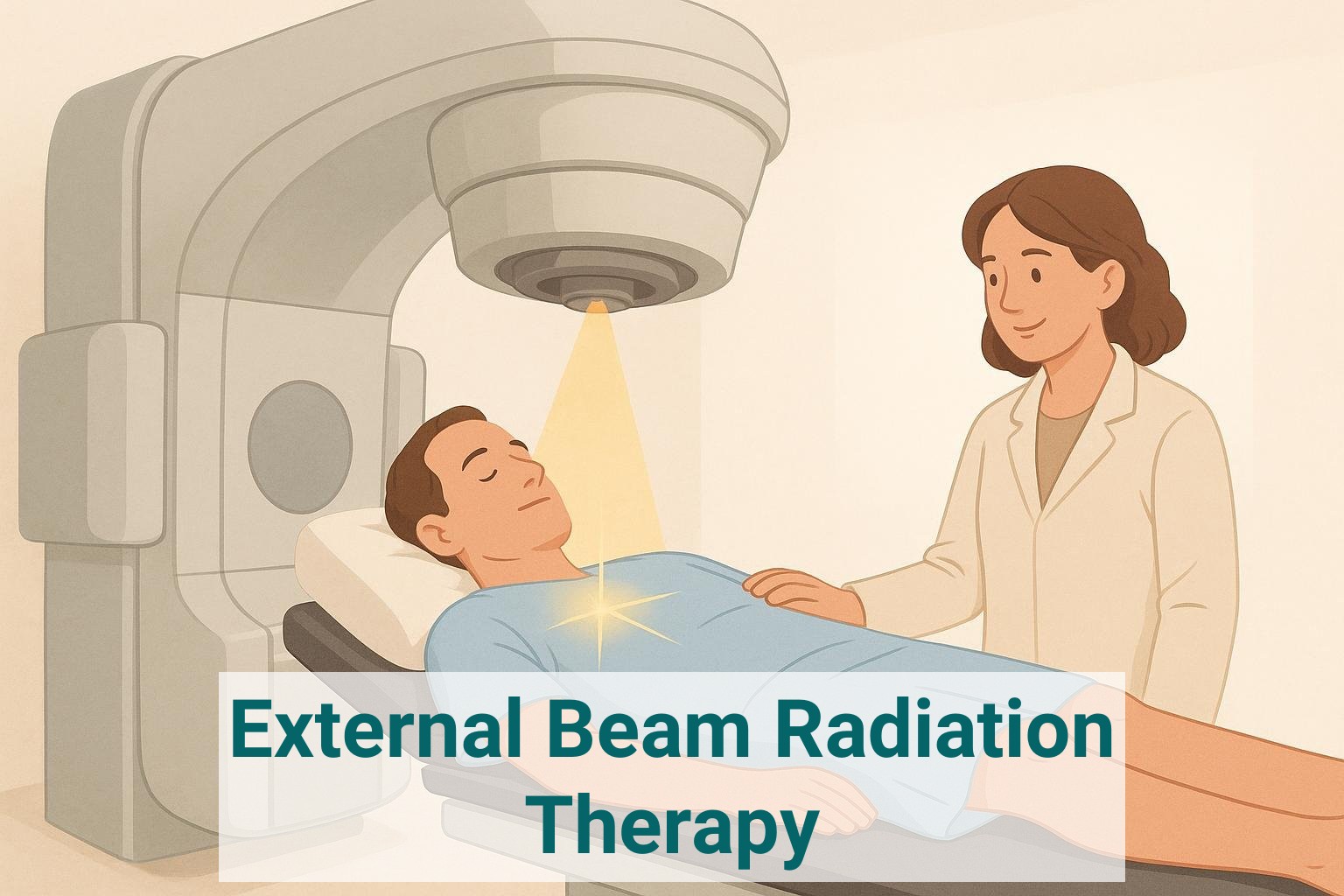
External Beam Radiation Therapy: What to Expect
External beam radiation therapy is a common cancer treatment. It uses high-energy X-rays to damage cancer cells and help stop them from growing. You might get radiation alone, or with other treatments such as surgery, chemotherapy, or immunotherapy. Your oncology team will plan a schedule that fits your cancer and your goals.
What is radiation therapy?
Radiation therapy uses high doses of X-rays (radiation) to target cancer cells. Healthy cells can often repair themselves better than cancer cells. This is why radiation can shrink tumors while trying to limit harm to normal tissue.
- External beam radiation therapy (EBRT): Radiation comes from a machine outside your body.
- Internal radiation therapy (brachytherapy): A small radioactive source is placed inside your body for a time.
This article focuses on external beam radiation therapy.
How does external beam radiation therapy work?
A large machine called a linear accelerator delivers radiation from outside your body. The machine moves around you to send beams from different angles. This helps focus the dose on the tumor and protect nearby healthy tissue.
- You do not feel the radiation while it is given.
- With EBRT, you are not radioactive after treatment. It is safe to be around family, children, and pets.
What happens before you start?
You will meet with a radiation oncologist and a care team. They will review your health history, do an exam, and talk about benefits and possible risks. Planning steps usually include:
- Simulation visit: A planning appointment, often with a special CT scan, to map your treatment area.
- Skin marks: Tiny tattoos or ink dots to guide daily setup. Try not to scrub them off. Tell your team if a mark fades.
- Masks or molds: Custom devices that help you stay still and in the same position each day.
- Instructions: What to wear and what to avoid on your skin (lotions, deodorants, perfumes) in the treatment area, based on your center’s guidance.
After simulation, your team uses computers to design your plan. This can take several days to a couple of weeks. You may have a “dry run” before the first treatment.
How often will you get radiation?
Your schedule depends on your cancer type and plan. Your team will explain the timing and number of treatments.
- One-time treatment: Some people receive a single session.
- Daily treatments: Many get treatment once a day, 5 days a week, for several weeks.
- Twice daily: Sometimes treatments happen 2 times a day for a shorter total time.
You might hear terms like “fractions” (each session) or “hypofractionation” (fewer, larger doses). Ask your team what your schedule means for you.
What happens during a treatment day?
Radiation is given in an outpatient clinic. You can go home afterward. A typical visit includes:
- Check-in and changing clothes if needed. Wear comfortable, easy-to-remove clothing.
- Positioning: You will lie on a firm table. Your mold or mask is placed to help you stay still.
- Imaging: Short X-rays or CT scans may be taken to line up the machine with your marks.
- Treatment: The machine moves around you and makes whirring sounds. The therapist operates it from a nearby room and watches you on a screen. You can talk through an intercom.
The radiation part usually takes 1 to 5 minutes. The whole appointment may last 15 to 30 minutes. You breathe normally unless your team guides you to hold your breath for certain plans.
Does it hurt? Will I feel anything?
Radiation does not hurt while it is given. You might feel the table’s firmness or notice the machine’s sounds. Some people notice a faint smell similar to ozone. If anything feels uncomfortable, let your team know.
Common side effects
Side effects vary based on the body area treated, the dose, and the number of sessions. Your team will review what to expect for your plan.
- Fatigue: You may feel more tired as treatment goes on. Rest, gentle activity, and a regular sleep schedule can help.
- Skin changes in the treatment area: Redness, dryness, itching, peeling, or blistering.
- Hair loss: Only in the area being treated.
- Area-specific effects: For example, sore throat or mouth sores with head and neck treatment; cough or swallowing changes with chest treatment; nausea, bowel changes, or cramping with belly or pelvic treatment; urinary urgency or burning with bladder or prostate treatment.
Early side effects often start within days to weeks of starting therapy and usually improve weeks after treatment ends.
Late effects and fertility
Some side effects can appear months or years later. These depend on the area treated and the dose. Most people do not have serious late effects, but they can happen.
- Fertility: Radiation near the pelvis or brain can affect fertility. Ask about options to preserve eggs, embryos, or sperm before treatment begins if this is important to you.
- Second cancers: Rare, but possible years after radiation. Your team balances benefits and risks when planning your care.
Keep all follow-up visits so your team can check healing and monitor for late effects over time.
Safety and daily life
- You are not radioactive after EBRT. It is safe to be with others.
- Tell your team about pacemakers, defibrillators, or metal implants before planning.
- Ask about working, driving, and exercise. Many people continue daily activities with adjustments for fatigue.
- Use birth control if pregnancy is possible during treatment, and tell your team if you might be pregnant.
Skin care tips during treatment
- Wash gently with lukewarm water and mild soap. Pat dry; do not rub.
- Use creams or moisturizers your team recommends. Ask before using any new product on the treatment area.
- Protect skin from sun with clothing and shade. If allowed, use sunscreen your team approves.
- Avoid hot tubs, heating pads, ice packs, and scratching on the treatment area.
- Wear soft, loose-fitting clothing to reduce friction.
Eating well and managing fatigue
- Try small, frequent meals and snacks high in protein and calories if your appetite is low.
- Drink fluids regularly unless you have been told to limit them.
- Light activity, like walking, can boost energy. Rest when you need to.
- Ask to meet with a dietitian if eating is hard.
Your care team is your partner
You will have regular check-ins with your radiation oncologist and nurses, often once a week during treatment. Share any symptoms you notice, even if they seem minor. Your team can suggest supportive care, adjustments to your plan, or referrals to specialists such as nutrition, physical therapy, dentistry, social work, or counseling.
Words you may hear
- Simulation (sim): The planning session, often with a CT scan.
- Linear accelerator (LINAC): The machine that gives radiation.
- Fraction: One treatment session.
- Boost: Extra radiation to a smaller area after the main course.
- Dosimetrist/Medical physicist: Experts who help design and check your plan for safety and accuracy.
Helpful resources
Last reviewed: 2025-12-01


