

Bone marrow suppression with cancer treatment: What it is and what to expect
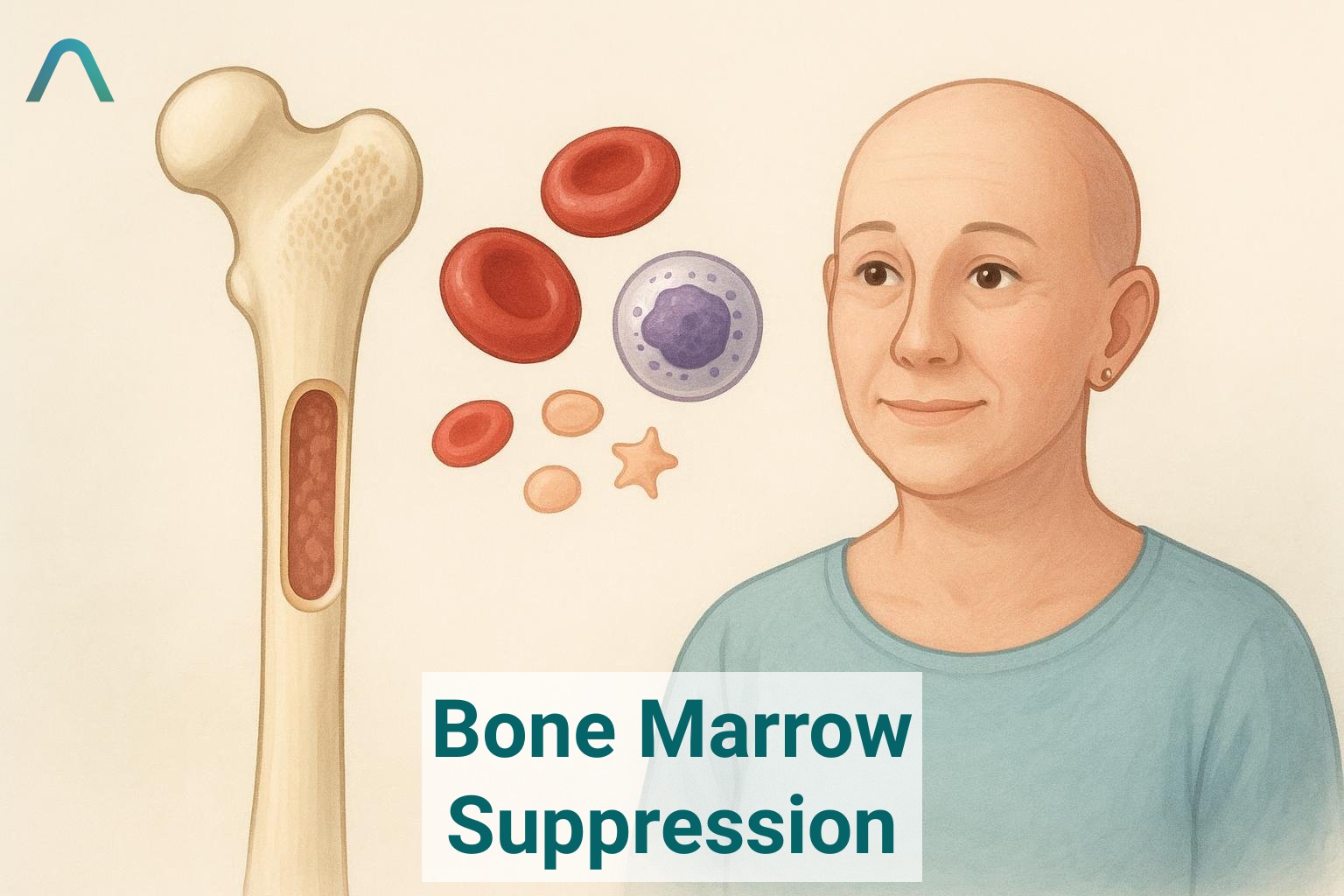
Bone marrow suppression means your bone marrow is not making enough blood cells. The bone marrow is the soft center of some bones. It creates red blood cells (RBCs), white blood cells (WBCs), and platelets. These cells carry oxygen, fight germs, and help your blood clot.
When counts drop, you might feel tired, bruise or bleed more easily, or get infections more often. Your oncology team watches your blood counts and helps you stay as safe and comfortable as possible.
What is bone marrow suppression?
Bone marrow suppression (also called myelosuppression) happens when treatments or certain illnesses slow down the marrow’s work. This lowers one or more types of blood cells:
- RBCs (anemia) — carry oxygen
- WBCs, especially neutrophils (neutropenia) — fight infection
- Platelets (thrombocytopenia) — prevent and stop bleeding
Bone marrow is part of your immune system. When it is suppressed, your body has a harder time fighting germs and healing.
How might you feel?
- Very tired, weak, short of breath, or dizzy (low RBCs)
- Fever, chills, or infections that start easily (low WBCs)
- Easy bruising, nosebleeds, bleeding gums, or tiny red spots under the skin (low platelets)
These symptoms can come from many causes. Share any changes with your care team so they can check your blood counts and guide next steps.
Which medicines can cause bone marrow suppression?
When a medicine causes bone marrow suppression, it is a side effect. Many types of medicines can do this, including some used to treat:
- Cancer (chemotherapy, some targeted or immunotherapies, and radiation that affects bones)
- Seizures
- Transplant rejection (immunosuppressants)
- Arthritis and autoimmune conditions
- Mental health conditions
- HIV
- Serious infections
If you think a medicine is causing side effects, talk with your doctor or nurse. Ask if there are alternatives or dose changes. Do not stop any medicine on your own.
How will your team monitor it?
- Complete blood count (CBC): checks RBCs, WBCs, and platelets
- Absolute neutrophil count (ANC): shows infection-fighting strength
- Timing: counts often fall to a “nadir” (lowest point) about 7–14 days after many chemo cycles, then recover
Your team uses these numbers to plan treatment timing, infection prevention, and safety steps.
How is bone marrow suppression managed?
Management depends on which blood cells are low and how low they are. Your team may discuss:
- Delaying or adjusting doses of the medicine causing low counts
- Transfusions: red blood cell or platelet transfusions when needed
- Medicines to prevent or treat infection when WBCs are low
- Growth factors: shots that help your body make more WBCs or RBCs
Your oncology team will explain the risks and benefits and what to expect. Ask about side effects and when to seek help.
What can you do to lower infection risk?
When WBCs are low, germs can cause infections quickly. These steps can help:
- Wash hands often with soap and water for at least 20 seconds. If not available, use an alcohol-based hand sanitizer (at least 60% alcohol).
- Clean hands before eating or preparing food; after coughing or sneezing; after using the bathroom or changing a diaper; after touching animals; and after touching high-touch surfaces like elevator buttons and remotes.
- Avoid touching your eyes, nose, and mouth.
- Do not share towels, tissues, food, or drinks with others, especially if they are sick.
- Stay up to date on vaccines recommended by your care team.
- During flu season or when COVID-19 rates are high, avoid crowds and sick contacts. Consider a well-fitting mask in busy indoor spaces if your team advises it.
Food safety basics
- Do not drink unpasteurized milk or eat foods made with it.
- Wash fruits and vegetables well under running water.
- Keep the refrigerator colder than 40°F (4.4°C) and the freezer at 0°F (-18°C) or colder.
- Cook meat and seafood until well done; cook eggs until the yolk is firm.
- Use separate cutting boards for raw meat and ready-to-eat foods.
- Wash hands, knives, and cutting boards after they touch raw food.
You can also ask your doctor or a dietitian about foods that can help you maintain strength during treatment.
Everyday habits that can help
- Rest when you need to. Light activity, as approved by your team, can boost energy.
- Use a soft toothbrush and shave with an electric razor to reduce bleeding risk.
- Prevent cuts: wear shoes, use gloves for yardwork, and be careful with sharp objects.
- Track your temperature at home if your team suggests it, and know your ANC if they share it.
Questions to ask your care team
- What are my current blood counts, and when is my “nadir” expected?
- What signs should I watch for at home?
- Do I need any preventive medicines or growth factor shots?
- Are there activity or diet changes I should follow while counts are low?
- Who do I call 24/7 if I get a fever or start to bleed?
When should I call my care team?
- Fever of 100.4°F (38°C) or higher, or chills
- New or worsening dizziness or shortness of breath
- New or unusual significant bleeding (including nosebleeds or bleeding gums)
- Heavy menstrual bleeding, or bleeding between periods
- Any signs of infection (sore throat, burning with urination, cough, redness or pus)
- Headache with vision changes, confusion, or chest pain
Helpful resources and references
- NCI: Myelosuppression (definition)
- CDC: Handwashing
- NCCN Guidelines for Patients: Cancer-Related Infections
Last reviewed: 2025-10-29


