Neutropenia and fever with cancer treatment
Neutropenia means your blood does not have enough neutrophils. Neutrophils are a kind of white blood cell. They help your body fight germs and prevent infections.
Neutropenia can happen during cancer treatment. Chemotherapy can slow the bone marrow, where blood cells are made. That lowers many blood cell types, including neutrophils.
What is neutropenia?
Doctors often check your absolute neutrophil count (ANC) on blood tests. A lower ANC means a higher risk of infection. When neutrophils are very low, your body may not show usual signs of infection.
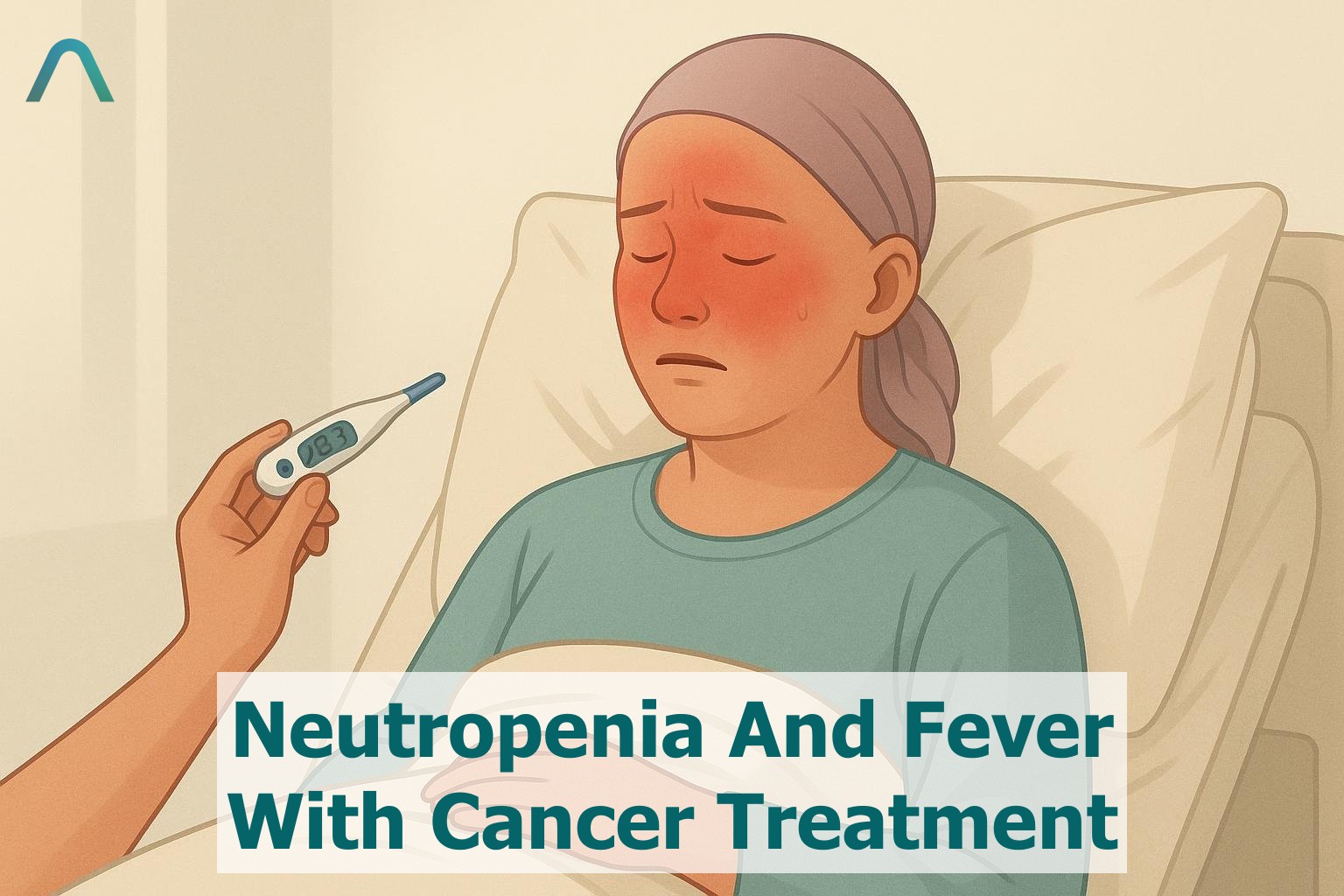
Because of this, a fever can sometimes be the only sign of infection during neutropenia. This is called neutropenic fever, or febrile neutropenia. It is serious and needs fast medical attention.
Why a fever matters in neutropenia
Neutrophils help control germs. Without enough of them, bacteria and other germs can spread quickly. Fever (100.4°F/38.0°C or higher) during neutropenia can be the first clue that you have an infection.
Your oncology team will tell you how to watch for fever and what steps to take if it happens. Ask where you should go for care, day or night.
How neutropenic fever is checked
In the clinic or hospital, your team may:
- Review your symptoms and timing since your last chemotherapy
- Check vital signs and examine you for a possible source of infection
- Order blood tests, including ANC, and blood cultures
- Collect urine or other samples, and sometimes do a chest X-ray
These tests help find the source of infection and guide treatment.
How neutropenic fever is treated
Clinicians usually start antibiotics as soon as possible, often through an IV in the hospital. Fast treatment lowers the chance of a serious, widespread infection.
Some people who are low risk may go home on antibiotic pills after a clinic visit or a short stay. Your team decides based on your symptoms, ANC, other lab results, and overall health.
Other care may include IV fluids, fever control, and treatment for the source of infection if one is found. Some people also receive medicines that help the body make more neutrophils. Your oncology team will explain what is right for your situation.
Can neutropenic fever be prevented?
Sometimes doctors prescribe preventive antibiotics for people at high risk. They may also use medicines that help the bone marrow make neutrophils. These steps are not for everyone. Your team will weigh benefits and risks.
The most important thing you can do is lower your chance of getting an infection. Small daily steps make a big difference.
Everyday steps to lower infection risk
- Wash your hands often with soap and water. Alcohol hand rubs work when soap and water are not available.
- Avoid crowded places and people who are sick, especially children with colds.
- Do not share food, cups, utensils, or personal items like toothbrushes.
- Shower or bathe regularly. Use lotion to keep skin from getting dry or cracked.
- Cook meat, eggs, and fish all the way through.
- Wash raw fruits and vegetables well before eating.
- Wear gloves when handling pet waste. Wash your hands right after.
- Avoid gardening, or ask your doctor first. If you garden, wear gloves and a mask to limit contact with dirt and dust.
- Brush teeth and gums every day with a soft toothbrush. Use a mouthwash if your care team recommends it.
- If you have mouth sores, avoid crunchy, hard, salty, or acidic foods.
- Keep home surfaces, like kitchen counters, clean.
- Get the vaccines your doctor recommends. Some vaccines are timed around treatment.
- Avoid going outside barefoot.
Working with your oncology team
- Ask, “What is my ANC, and when is my lowest point (the nadir) after chemotherapy?”
- Know your plan for fever: where to go, what number to call, and what to bring.
- Keep a working thermometer at home and know how to use it.
- Review foods, activities, and travel that are safe for you right now.
- Discuss whether preventive antibiotics or medicines that boost neutrophils are appropriate in your case.
- Confirm which vaccines you should receive and when.
When should I call my care team?
If you had chemotherapy in the last 6 weeks or were told you have neutropenia, watch closely for signs of infection. Call your care team right away or seek urgent care if you have:
- Fever of 100.4°F (38.0°C) or higher
- Chills or sweating
- Sore throat, mouth sores, or toothache
- Cough or shortness of breath
- Pain or burning when urinating, or frequent urination
- Stomach or belly pain; pain in the anal area; diarrhea or sores around the anus
- Skin redness, swelling, or pain, especially near a cut, wound, or where you had an IV
- Unusual vaginal discharge or itching
Key takeaways
- Neutropenia is a low neutrophil count that raises your infection risk.
- Fever during neutropenia is an emergency sign; fast medical care is important.
- Daily habits and a clear plan with your care team help keep you safer.
Helpful resources and references
Last reviewed: 2025-12-04