Understanding stages of cancers
Cancer staging is how doctors describe where cancer is in your body and if it has spread. It gives a shared language so you, your family, and your care team can talk about the cancer clearly. Staging also helps with planning care and understanding what to expect.
What is cancer staging?
Staging shows the size of the tumor, which nearby areas are involved, and whether cancer has spread to distant parts of the body. It does not tell the whole story, but it is a key piece of information your team uses along with other details, like tumor type and grade.
How do doctors find the stage?
Your team gathers information from tests and exams. You might have:
- Blood tests to look for clues about organ function and tumor markers.
- Urine tests to check for signs of disease or treatment effects.
- Imaging tests such as X-rays, CT scans, MRIs, or PET scans. These create pictures of the inside of your body.
- Biopsies where a small sample of tissue or fluid is taken and examined under a microscope.
Your oncology team will explain which tests you need and what the results mean for you.
Why staging matters
- Planning care: Staging helps your team choose options that fit your situation.
- Understanding outlook: It offers a general idea of how the cancer might behave.
- Common language: It helps doctors communicate and compare results from studies.
- Clinical trials: Staging can help match you with research studies that fit your diagnosis.
The TNM system in plain language
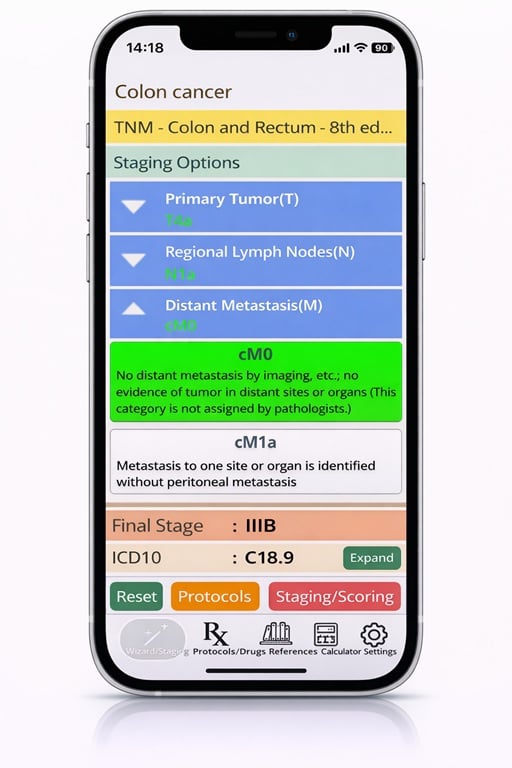
Most solid tumors use the TNM system. Each letter is followed by numbers and sometimes letters to give detail. Then, the information is combined into an overall stage.
- T (tumor): Where the cancer started, how big it is, and whether it has grown into nearby tissues.
- N (node): Whether cancer has spread to nearby lymph nodes, and how many.
- M (metastasis): Whether cancer has spread to distant parts of the body.
Your doctor uses the TNM details to assign a staging group written as a stage number, often with Roman numerals.
Stage groups 0 through IV
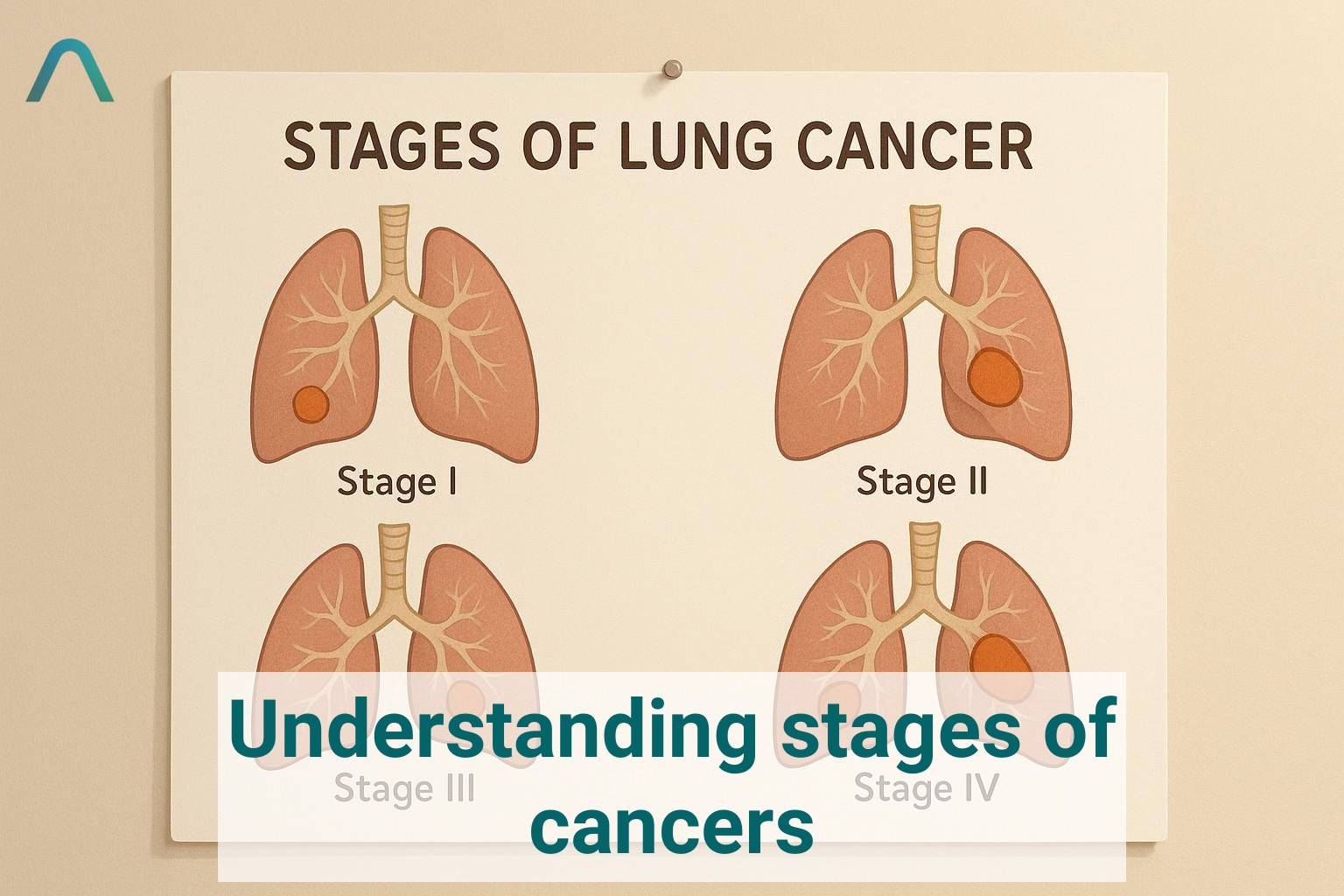
- Stage 0: Abnormal or pre-cancerous cells that have not spread.
- Stage I: A small tumor that has not spread to lymph nodes or distant sites.
- Stage II: A larger tumor; it might have reached nearby lymph nodes.
- Stage III: A bigger or deeper tumor that may involve nearby tissues and/or lymph nodes.
- Stage IV: Cancer has spread to other parts of the body (metastatic cancer).
These stages are often written in Roman numerals. For example, stage 3 is “stage III” and stage 4 is “stage IV.” Higher numbers mean more advanced cancer.
Other words you might hear
- In situ: The cancer has not grown beyond the layer of tissue where it began.
- Localized: The tumor is in the original organ and nearby tissue.
- Regional: The cancer has grown just outside the original organ or into nearby lymph nodes.
- Distant: The cancer has spread to other parts of the body.
- Unknown: There is not enough information yet to assign a stage.
Restaging: what it means
Sometimes doctors repeat tests later and “restage” the cancer. This shows whether it is getting better, getting worse, or staying the same. Your original stage at diagnosis stays part of your record, but restaging helps describe your current situation and guide next steps.
How staging can differ by cancer type
- Blood cancers (like leukemias and lymphomas) often use different systems instead of TNM.
- Brain and spinal cord tumors are usually described by location and grade rather than spread to distant sites.
- Pediatric cancers may have their own staging rules.
- Biomarkers and grade (how abnormal the cells look) can be added to staging in some cancers.
Your oncology team will explain which system applies to your specific cancer.
Common questions
- Does a higher stage always mean worse outcomes? Higher stage means more spread, but outcomes vary. Tumor type, grade, biomarkers, overall health, and how the cancer responds to treatment also matter.
- Can my stage change? The cancer itself can change over time. Doctors may restage to show the current extent. Your original stage at diagnosis does not disappear.
- Why do I need several tests? No single test gives the full picture. Combining results makes staging more accurate.
- What if my stage is “unknown”? It may mean more tests are needed, or staging is not possible yet. Your team will share the plan.
Talking with your care team
- What is my cancer stage, and how did you determine it?
- What do my T, N, and M numbers mean in plain language?
- Does my cancer use the TNM system, or a different system?
- Has the stage changed after surgery or other treatments?
- Do I need any more tests to clarify the stage?
- How might the stage guide my next steps and decisions?
References and helpful websites
Last reviewed: 2025-12-04